You wake up, have your coffee, and log in to see money in your account for something you published years ago. It’s just you and your income stream. No traffic jams, no boss, no stress.
Well, that’s the genius of selling digital content.
In the past 10 years, online sales have taken off. People make money selling courses, ebooks, stock photos, templates, and memberships. Once created, content continues to generate revenue with minimal effort for year after year.
But it’s not automatic. You need a plan, the right platform, and good strategies to build your brand.
This guide reveals 10 proven ways to sell content online, tips that work, and strategies for passive income. Let’s dive in.
Foundations & Pre-Work Before Selling Content Online
Before you start making products or uploading content on marketplaces, follow these steps.
Well, this is usually a frequently overlooked step. But it’s what distinguishes successful content creators from people who burn out fast.
Here are the steps:
Choosing and Validating Your Niche
Your niche is your foundation. If you choose the wrong one, you could have a hard time selling. Pick the perfect one, and your content is almost marketing itself.
The trick is finding a sweet spot between what you love, what you’re good at, and will pay for.
For instance, if you are passionate about fitness, you can make home workout plans for new moms. That’s specific, in-demand, and targeted.
So, how do you validate a niche? Well, start small.
Also, see what people are searching for on Google or YouTube. Play around Reddit or Quora to see what tends to pop up.
If people are already demanding solutions, they likely will pay for a packaged solution that is tried and true.
Understanding Your Audience
It goes beyond age or gender: You have to know your audience. Also, you have to understand their challenges, goals, and pain points.
Ask yourself:
What issue keeps them up at night?
What are they absolutely trying to get?
What’s preventing them from reaching it?
For instance, a young professional might be interested in mastering personal finance but get put off by jargon. Your content might distill it into plain words and tasks to perform.
Determining the Kind of Content to Create
Content can be in different varieties, from eBooks, templates, and courses, to audio guides, stock photos, or even AI prompt packs. The key here is to pair your type of content with the way your audience likes it.
Busy parents may be more inclined to want short video lessons that they can finish in 10 minutes.
Some professionals may seek templates or checklists that they can use immediately.
Creative types might appreciate design assets or soundtracks.
Don’t get stuck in one format. A single idea can spawn many products.
For example, suppose you write an in-depth eBook: now you could turn each chapter into a video course and package it up as templates and a mini email course.
Competition Research & Differentiation
If you are selling content online, you will have competition. But competition isn’t imperfect. It actually demonstrates demand, in fact. The challenge here is to stand out.
See what your competitors are doing. Then ask:
How can you be doing it differently or better?”
Can you shorten it, clarify it, make it more practical, or more lively?
Read the negative reviews of your competitors’ products. Customers frequently identify precisely what they’ve wished the product would do. Include those pieces that are absent in your own content.
Branding & Positioning
Do you want to be perceived as a friendly guide, an expert, or an innovative risk taker? Decide this early.
Positioning also matters. Are you the budget-friendly option, the luxury option, or the expert specialist?
For instance, you could promote your digital course as the “quickest shortcut to getting results in 30 days” rather than only an overall guide.
Legal & Administrative Setup
Finally, considerations for the boring but critical stuff:
Do you have the rights to the content that you’re selling?
Do you need to safeguard it with copyright claims?
Do you register a business or work as a sole proprietor?
Do you have a refund policy and terms of service?
It’s not a thrilling process, but if you get these details right, it will save you frustration down the road.
The 10 Proven Content Monetization Methods For Passive Income
Making money from content is no longer limited to big brands or influencers. Almost anyone with valuable skills, knowledge, or creativity can create digital products that keep earning after they are produced.
Using these 10 proven methods, you can package, sell, and scale your content to earn a steady income.
Digital Downloads & Asset Packs
Selling digital downloads is one of the easiest and quickest ways to get things going online.
These are products for which customers can view and download at the time they see the product online. The best part is, you write them once, and you can sell them over and over with no further effort.
Digital downloads can include:
Templates (CVs, slides, business plans, social media posts)
Printables (planners, calendars, worksheets, and coloring books)
Design resources (icons, mockups, fonts, graphic packs)
Toolkits (such as checklists, cheat sheets, process maps)
Usually, people want tools that save time. Instead of starting from scratch, they prefer something pre-made that they can tweak. If you can give them a shortcut, they’ll happily pay for it.
Here is a breakdown of some other Platforms you can use:
Etsy: best for printables, planners, and crafting things
Gumroad: a flexible sales platform for digital products of any type with core product packaging and payments functionality.
Creative Market: ideal for designers who want to sell design assets
Follow the below tips to succeed:
Solve a specific problem. A “general planner” can get lost in the noise, but a “weekly fitness tracker for beginners” does not.
Bundle for a higher value. Rather than peddling a single template for $5, sell a 20-pack for $25.
Use attractive previews. People buy with their eyes. Show them sample pages or mockups so that they can envision using your product.
Keep updating. Add new iterations or designs incrementally. This not only brings back repeat buyers but also provides you with new marketing content.
2. Online Courses & Training Programs

Have you ever taught a friend how to do something? Then you already have the beginnings of an online course.
Online courses are one of the best-selling and most profitable types. They afford you a structured way of packaging your knowledge and selling it at a price point above the typical download.
Courses can be:
Video-based (step-by-step lessons)
AUDIO (for doers and listeners on the go)
Mixed (videos, PDFs, quizzes, worksheets)
So, why does it work?
Because people aren’t buying information, they’re buying transformation. A good course makes a promise to the user (learn how to code, master photography, learn Spanish in 30 days).
Here are some essential tips you can follow:
Focus on one clear outcome. “Become a better writer” is not specific. “Learn how to write your first short story in 14 days” is straightforward.
Keep lessons short. Chunk content into 5–10 minute videos. Long lectures scare people off.
Add extras. Do worksheets, templates, or mini-projects to help learners apply what they are covering.
Price smartly. Cheap courses often get ignored. If your course solves a massive pain point, don’t be afraid to charge a premium for it.
3. Membership & Subscription Content

Instead of chasing one-time sales, think about offering ongoing access. With a membership or subscription, customers pay monthly or yearly to enjoy your content regularly.
This creates a steady income for you and convenience for them, since they don’t have to buy each time; they simply stay subscribed. That’s the power of subscriptions.
What you can offer in a membership:
Exclusive articles, guides, or reports
Premium podcasts or videos
Monthly templates or downloads
Private Community/mastermind
Exclusive live Q&A calls or office hours
A subscription turns occasional buyers into regular ones. Instead of $20 once, from the same person, you might get $20 each month.
4. Licensing & Stock Content
You may not sell your content to individuals, but you can license it to companies and creators. This works great for:
Stock photos and videos
Music and sound effects
Fonts and design elements
Icons and illustrations
Actually, businesses, marketers, and creators are always in need of new media. Licensing allows them to utilize your work legally, while you get paid royalties. A few things you should keep in mind:
Go for evergreen themes. “(summer vacation)” stuff will be popular every year.
Upload regularly. The more items you have, the more chances you have to get discovered.
Tag wisely. When writing, use specific, searchable keywords so people can more easily find your content.
5. Books & Low-Content Publishing
A lot of people aspire to write a book, but many don’t know that you can publish and sell books online (digitally) without involving publishers.
With Amazon Kindle Direct Publishing (KDP), you can now make more than a few bucks each month selling your knowledge or creativity.

But here’s the cool part: You don’t need to write that 300-page masterpiece all the time.
It’s also booming for books with light-ish content, journals, planners, and coloring books. These aren’t weighty writings, but they still fill a real need.
Examples of low-content publishing:
Daily gratitude journals
Fitness trackers
Recipe journals
Adult coloring books
Goal-setting planners
Usually, people want tools that help them get organized and stay organized, or to express their creativity. Rather than creating their own, they purchase premade books to lead them.
6. Software, Plugins & Tools
Not all information is words or pictures. And software is its own kind of content, too.
Think small apps, WordPress plugins, or productivity tools. These are solving a particular problem and can potentially generate recurring revenue in the form of licenses or subscriptions.

Examples of digital tools:
A budgeting spreadsheet with automation
WordPress SEO by Yoast, and… it is time to add a new WordPress Plugin.
A Time Saving Chrome Extension for tasks
A micro-SaaS for the small, narrow job that it does well enough
Why does it work?
And customers are willing to buy tools (actual or virtual) that save them time or effort. A spreadsheet template can even sell if it helps someone reach a goal more quickly.
Here are some ways to monetize:
One-time purchase
Monthly or yearly subscription
Freemium lets you have a free basic version and a paid, high-quality version.
If you’re not a developer, team up with a freelancer. You offer the idea and marketing; they take care of the coding. Many successful micro-tools are created this way.
7. Audio & Podcast Products
Audio content is growing fast. From podcasts to audiobooks to calming meditations, folks love listening while driving, exercising, and cooking. It's part of what makes audio a flexible format to sell content.

Ways to monetize audio:
Audiobooks on Audible
Subscription versions of popular podcasts on platforms like Apple Podcasts
Licensing internal music and sound effects
Selling guided or motivational audio meditations
Audio fits into busy lives. For those who have no time to read or sit in front of a video screen, they can multitask and still learn something or get entertained.
Follow the tips below to succeed:
Focus on quality. Poor audio turns listeners away. Invest in a decent microphone.
Bundle content. Don’t market a single meditation track, but rather a “30-day stress relief program.”
Use your voice. Authenticity outranks perfect polish. Warm and approachable, the tone speaks to the listener.
8. AI & Prompt Packs / Digital Tools

This is one of the youngest and fastest-growing hustles. With accessible AI tools like ChatGPT and Midjourney getting popular, folks are looking for out-of-the-box workflows that help them see results immediately.
Examples of AI content products:
Quick Fire libraries for writers, designers, or marketers
Ready-to-use automation workflows
Prompt packs for specific styles of images, MidJourney
AI-generated templates or guides
So the vast majority of people don’t know how to make the most of A.I. tools. They’re happy to pay for shortcuts.
Follow the tips below for the best results:
Be specific: “100 ChatGPT prompts” is vague. “100 ChatGPT prompts for real estate marketing” speaks directly to a buyer.
Offer updates: AI tools change fast. Offer free updates for six months or a year to make sure your product remains current.
Show examples: Show that your suggestion produces a meaningful result. Screenshots sell better than descriptions.
9. Video & Multimedia Content
No content format builds trust faster than video. “When people see your face and hear your voice, that’s a connection.
You can monetize videos in the following ways:
Monetization on YouTube with ads and sponsorships
Selling video tutorials or workshops
Offering evergreen video courses
Selling stock footage to media companies
Video is also entertaining and easier to consume than text. Watching demonstrations rather than reading instructions, many learners remember it better.
Focus on evergreen topics. How to use Photoshop basics. How-to guides get a lot of shares because they’ll be relevant long after you’ve hit publish.
Also, repurpose content. Cut long videos into short clips for TikTok or Instagram to drive traffic.
People believe and trust the experts that they see on camera. Relatively brief explainer videos can even elevate you as a thought leader within your industry.
10. Affiliate Marketing Through Content
Not everything you sell has to be your own content. Affiliate marketing is when you create content (blogs, videos, tutorials) that promotes other people’s products, and you get paid for every sale.
Examples of affiliate content:
“Top 10 tools for freelancers” affiliate-linked blog post
YouTube software or gadget reviews
Tutorial on how to use a product and where to buy it
Service recommendations from email newsletters you trust
Why it works:
They want recommendations that they can trust.” If you’ve built an audience, they will respect your guidance.
Quick tip: Create comparison content. Such as: “Tool A vs. Tool B: Which is best for beginners?” Comparisons frequently do well in search and persuade people to buy.
Platform & Delivery Options: Where to Sell Your Content?
Choosing where to sell your content is one of the most critical steps. The right platform not only delivers your work but also affects how people see your brand.
Let’s look at the main options.
Self-Hosted or White-Label Platforms
When you use self-hosted platforms, your digital store is owned by you. You set the design of your stuff, the price of your stuff. And ultimately, how customers will experience their purchase.
Platforms like WordPress with WooCommerce, Shopify, or learning management systems such as EzyCourse give you independence.
While setup requires more effort and technical skills, you gain independence, build your email list directly, and keep long-term control over how your content is delivered and sold.
Features:
Complete control of store design
Customizable pricing options
Direct ownership of customer data
Ability to build email lists
No restrictions in the market or abrupt bans
Flexibility with what you want to sell (courses, ebooks, templates)
Integrated payment gateways
Pros:
Complete control over branding and pricing
Build long-term customer relationships
Own your email list
No surprise rule changes
Highly scalable for future growth
Cons:
Involves traffic and tech setup
Customer support is your responsibility
Third-Party Marketplaces and Aggregators
Marketplaces are traffic-driven platforms through which millions of shoppers already search for products. They are beginner and setup-friendly, which is why most new sellers choose them.
But competition is fierce, fees can take a bite out of profits, and you don’t control customer data or the sustained relationship with buyers.
Marketplaces like Etsy (for templates, printables, and design assets), Amazon (for eBooks and low-content publishing), Creative Market (for graphics and fonts), or Shutterstock (for stock photos and videos) already have millions of shoppers.
Features:
Easy listing process
Access to the existing customer base
Quick setup and limited technical know-how
Search-based visibility
Secure payment systems
Customer trust in platform reputation
Tools for product promotion
Broad selection of content types that are supported
Pros:
Instant access to large audiences
Saves time building traffic
Trusted platforms boost buyer confidence
Minimal tech setup required
Quick way to validate product ideas
Cons:
High competition with similar products
Fees reduce overall profit margins
Subscription and Membership Models
On membership platforms, you can make recurring income by providing ongoing access to exclusive content.
Customers pay a month-to-month or annual fee instead of purchasing content one by one for access to special articles, podcasts, videos, or to community. This is a loyalty-building model.
Also, it requires that you are generating ever-increasing value for your members, and it requires maintaining long-term engagement.
Platforms like EzyCourse let you sell access to exclusive content. This could be premium articles, podcasts, behind-the-scenes videos, or a private community.
Features:
Recurring monthly or yearly payments
Exclusive gated content
Capacity to build a closed community
Direct customer communication
Integrated payment collection
Member-only resources or bonuses
Customizable membership tiers
Stronger long-term engagement
Pros:
Predictable recurring income
Builds customer loyalty
Encourages long-term relationships
Easier to upsell higher-value products
Creates a sense of exclusivity
Cons:
Needs fresh info and value added consistently
Risk of members canceling if the value decreases
Hybrid or Multi-Channel Strategy
A hybrid mixes the various platforms to diversify risk and exposure.
You could sell starter products, courses, books, or tutorials, for example, on marketplaces for the exposure, and premium courses directly on your site.
This strategy pools in new customers and creates your funnel out, while also safeguarding you against the following change everything one platform has up its sleeve.
For example, they sell an entry-level product on Etsy to get exposure, then direct buyers to their own website for premium courses. Or they use Substack for ongoing articles but also sell video workshops on Teachable.
Features:
Hybrid of owned and third-party platforms
Greater exposure across multiple audiences
Reduced reliance on one platform
Ability to create sales funnels
Capture emails for long-term control
Flexibility to test new channels
Spreads income risk
Pros:
Reduces income risk
Expands audience reach
Blazes trails from small to big deals
Flexible and adaptable strategy
Builds a stronger business ecosystem
Cons:
Even more channels to keep up with at once
Needs robust email capture to perform well
Now, How Can You Market & Distribute your Content?
You can have the best digital course, eBook, or video series, but without a clear plan to reach buyers, it will just sit on your hard drive. Marketing is what turns your content into income.
Below are proven ways to promote and distribute your content so it reaches the right audience.
Building Your Personal Brand
People buy from those they trust. Your brand is what tells potential customers, “This person knows what they’re talking about.”
How to build your brand:
Share valuable insights consistently on platforms like LinkedIn, Medium, or Twitter.
Use the same style, tone, and visuals across all platforms so people recognize you.
Show your face when possible: authenticity builds trust.
Quick tip: Don’t wait until you’re an “expert.” Share your journey. People love following someone who is learning and teaching at the same time.
2. Using Social Media Wisely
Social media is one of the fastest ways to get your content in front of people, but you don’t need to be everywhere. Pick one or two platforms where your audience hangs out.
Examples:
Instagram for visual-driven content like templates, planners, and design tools
LinkedIn for business-related products like courses, eBooks, and B2B templates
TikTok or YouTube Shorts for quick, educational video bites
3. Email Marketing
Email is still the most powerful marketing tool for selling digital products. Unlike social media, you own your email list.
Why email works:
Emails land directly in your audience’s inbox.
You can build relationships over time with regular tips, stories, and offers.
Automated emails keep selling for you even while you sleep.
Offer a freebie (like a mini-guide, checklist, or template) in exchange for an email address. Send regular, helpful content, not just sales pitches.
Also, use sequences: for example, a “welcome series” that introduces you, provides value, and then promotes your product.
4. Content Marketing & SEO
One of the best ways to earn passive income is by creating content that ranks on Google. Blog posts, guides, and tutorials can drive traffic to your digital products for years.
Steps to start:
Research what your audience searches for using tools like Google Keyword Planner or Ubersuggest.
Write in-depth guides that actually solve problems, not just surface-level content.
Naturally link your paid products inside your blog posts.
5. Collaborations & Partnerships
Sometimes the fastest way to grow is by tapping into someone else’s audience.
Ways to collaborate:
Guest posting on blogs that already attract your target audience
Appearing on podcasts to share your expertise
Partnering with influencers to promote your content
6. Paid Ads (Optional Boost)
If you have some budget, paid ads can give your content an initial push. Platforms like Facebook Ads, Instagram Ads, and Google Ads allow you to target particular audiences.
When to use ads:
To test if your product resonates with people.
To boost a launch or special promotion.
To retarget people who visited your website but didn’t buy.
Practical Tips for Long-Term Passive Income
Automate the Simple Tasks: Use tools to deliver products, send emails, and take payments. Ask for reviews automatically to increase future sales.
Do Not Depend on One Product: Make ebooks, templates, and videos. Sell on many platforms. Mix one-time products with memberships. Bundle items for high value.
Create Evergreen Products: Make products that solve lasting problems. Examples are planners or beginner courses. Update them regularly to keep your sales fresh.
Track and Improve: Check website traffic, sales, and email results. Study refunds and complaints. Focus on products that sell the most.
Build a Community: Start a private group. Host live chats. Give rewards and discounts. A loyal community brings repeat buyers and word of mouth.
Keep Learning and Adapting: Follow trends and test your own ideas. Take one day a month to review and plan. Keep improving step by step.
Protect Your Work: Add watermarks or branding. Use safe platforms. Copyright your most valuable work. Focus on service and updates instead of piracy.
Build a Brand, Not Just Products: Stay consistent in style and tone. Share your story. Create a simple system that people will remember. A strong brand builds trust.
Top 3 Platforms to Sell Content Online and Make Passive Income
As we all know, selling digital content is a smart way to earn passive income. Once created, these products sell repeatedly with little effort.
Below, you'll find the top 3 platforms for selling digital content, each offering unique features to increase reach.
EzyCourse

EzyCourse makes selling content efficient and straightforward. It allows you to create courses, coaching programs, memberships, and digital products all in one place.
You can build website pages using drag-and-drop editors, set up smooth checkout flows, and protect your content from unauthorized sharing.
Also, it supports multiple pricing options, including one-time payments, subscriptions, tiered pricing, and split payments for expensive products. This flexibility helps you reach different types of buyers.
EzyCourse also provides tools to engage your audience. Community features, live Zoom integration, chat options, and mobile apps keep students connected and learning easily.
The mobile app ensures learners can access content anywhere, increasing engagement. DRM and content protection features keep your content safe.
Creators who have been using EzyCourse for many years report that once the platform is set up, it mostly runs automatically. This lets you focus on creating content instead of managing technical details, making it easier to grow your online business.
What You’ll Get in EzyCourse
Course Builder: Create lessons, modules, quizzes, assignments
Email Automation: Send campaigns, sequences, triggers
Community: Forums, groups, chats inside your site
Mobile App: Branded app users can use on iOS & Android
Marketplace: Let people browse and buy inside EzyCourse
Site Builder: Drag-and-drop pages with templates
Zoom Integration: Host live classes and online sessions
Coaching Tools: Schedule, manage clients, track progress
SCORM Support: Upload interactive content and track usage
Multi-Currency & Geo Pricing: Show prices based on region
AI Subtitles: Auto-generate subtitles for video lessons
DRM / Content Security: Protect content from leaks
Membership Features: Create subscription plans and clubs
Smart Upsell & Tiered Pricing: Offer upsells and bulk pricing
Pricing Details
Essential Plan – $59/month. Unlimited courses, marketing emails, 2 communities, and coaching for 20 active clients.
Pro Plan – $139/month. Adds more communities, coaching capacity, membership tools, multi-currency, and unlimited products.
Unlimited Plan – $199/month. All features with higher limits, more automation, and fewer restrictions.
Elite Plan – $299/month. For high-volume users, with added perks like white-label apps, VIP support, and priority feature requests.
You’ll Love About It:
Everything you need in one place
Strong security and content protection
Flexible pricing models (subscriptions, tiered, etc.)
Built-in coaching and community features
Mobile app for students
Supports multiple currencies
Zoom is ready inside the system
Drag-and-drop builders
Upsell features built in
Automation and email marketing included
Scales as your business grows
Offers white-label and custom options on higher plans
Limitations
Add-ons might cost extra
For very simple businesses, many features go unused
2. Sellfy
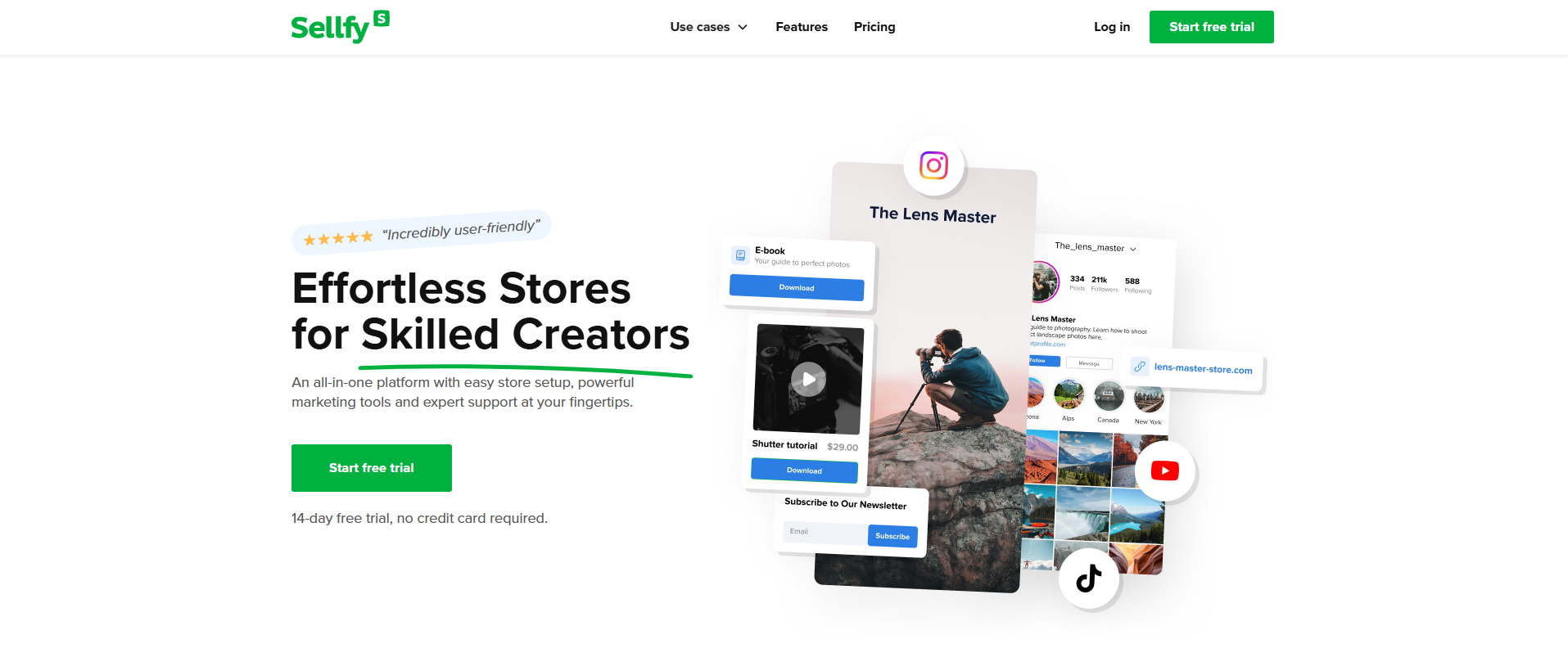
Finding the right platform can make or break your content business. You want something simple, but powerful enough to grow with you. That’s where Sellfy stands out.
It’s an all-in-one tool made for creators who want to sell digital and physical products without the headache of using multiple apps.
With Sellfy, you can set up your store in minutes and start selling eBooks, videos, courses, music, art, or even physical items.
It also supports print-on-demand products, so you don’t need to worry about inventory. The checkout process is fast and smooth, which means higher conversions and happier customers. On top of that, you can build subscriptions for a steady monthly income and tap into built-in marketing tools to boost your sales.
What You’ll Get in Sellfy:
Digital Products: Sell eBooks, videos, art, music, and more with instant delivery.
Physical Products: Manage inventory, orders, and promotions from one dashboard.
Print-on-Demand: Sell custom merch without upfront costs or stock.
Subscriptions: Turn one-time buyers into recurring income.
Unlimited Products: No cap on the number of items you can upload.
Custom Storefront: Choose themes or design your own store look.
Email Marketing: Send campaigns directly from your dashboard.
Growth Features: Upselling, cart recovery, and affiliate tools built in.
Optimized Checkout: Fast and mobile-friendly for better conversions.
Analytics: Track sales, traffic, and buyer behavior easily.
Product Migration: Move your existing products with support from Sellfy.
Affiliate Marketing: Create your own affiliate program to expand reach.
Priority Support: Access expert help when you need it most.
Secure Payments: Stripe, PayPal, and SSL encryption to keep payments safe.
Pricing Details:
Starter – $29/month (up to $10k/year in sales)
Sell downloads, subscriptions, and merch. Unlimited products. Basic email marketing.Business – $79/month (up to $50k/year in sales)
Everything in Starter plus custom fields, upselling, cart abandonment, and affiliate marketing.Premium – $159/month (up to $200k/year in sales)
All Business features plus product migration, advanced options, and priority support.
You’ll Love About Sellfy
Easy to set up in minutes
Clean, beginner-friendly dashboard
Zero transaction fees
Unlimited product uploads
Supports both digital and physical items
Built-in print-on-demand service
Strong marketing tools
Subscriptions for recurring income
Fast, optimized checkout
Simple store customization
Trusted by creators worldwide
30-day money-back guarantee
Limitations of Sellfy
Annual sales limits on each plan
Advanced features are only available in higher tiers.
No built-in blogging option
Limited store design compared to Shopify.
Basic email marketing compared to dedicated tools
Not ideal for extensive product catalogs
3. SendOwl

Selling online should feel simple. That’s where SendOwl comes in. It’s more than just a checkout tool, it’s a complete platform to sell your digital products, courses, subscriptions, or even coaching.
With SendOwl, you don’t worry about delivery or payment headaches. Everything runs smoothly in the background while you focus on creating.
Setup is quick. Upload your product, connect your payment option, and you’re ready to sell. SendOwl supports Stripe, PayPal, Apple Pay, and connects with tools like Shopify, Mailchimp, and Notion.
Your buyers get instant access to their purchase, which means fewer questions in your inbox and more happy customers.
What makes it stand out is the way it helps you grow. Features like upsells, cart recovery, and affiliate programs let you earn more from each sale.
It’s flexible too! You can design checkout pages or simple sales links that work anywhere.
What You’ll Get in SendOwl
Digital Products: Upload and sell eBooks, music, art, software, and more.
Online Courses: Deliver lessons, workshops, and tutorials securely.
Subscriptions: Turn one-time buyers into recurring revenue streams.
Coaching Services: Sell one-on-one or group coaching directly.
Bundles: Package multiple items together for higher-value sales.
PDF Stamping: Protect your eBooks with customer details for security.
Upsells: Suggest extra products at checkout to increase order value.
Cart Abandonment: Recover lost sales with automated reminders.
Affiliate Programs: Let others promote your products for commission.
Sales Pages: Create custom sales pages or embed links anywhere.
Secure Payments: Stripe, PayPal, Apple Pay, and more are supported.
Integrations: Works with Shopify, Mailchimp, Notion, and GetResponse.
Customization: Build branded checkouts and storefronts.
API Access: For developers who need complete flexibility.
Pricing Details
Starter – $39/month
Up to 5,000 orders/year, $10k sales/year, 20 products, 10 GB storage.Standard – $87/month
Up to 25,000 orders/year, $36k sales/year, 100 products, 50 GB storage.Pro – $159/month
Up to 50,000 orders/year, $100k sales/year, unlimited products, and storage.
You’ll Love About It
Works with popular tools
Handles digital delivery automatically
Subscription support
Very easy to use
Fast checkout system
Built-in upsells
Cart recovery features
Affiliate program included
Customizable sales pages
Secure payment options
Scales with your business
Trusted by creators worldwide
Limitations
Annual sales caps on each plan
Limited design flexibility compared to Shopify
No built-in blogging tool
Overages are charged for bandwidth.
Best for digital, less for extensive physical catalogs
No native phone support
Final Touch
Selling content online is not only about money. It also gives you freedom. You can take what you know, turn it into digital products, and sell them again and again.
The right way to get started is to keep it simple. Many creators began with just one product, like an eBook, a template, or a short course. From there, they grew step by step.
However, a platform like EzyCourse makes this easier. It brings everything into one place: courses, memberships, coaching, and digital products.
You don’t need many tools. With flexible pricing, community features, and strong content protection, EzyCourse helps you sell easily and grow faster. Start small, stay consistent, and let your content build long-term income.


![10 Best AI Chatbots for Business, Creators, & Support Teams [2026]](/_next/image?url=https%3A%2F%2Fezycourse.b-cdn.net%2F2422%2Fcmkqxgvsy0lg9xi8zcidc202x.png&w=1920&q=75)
![5 Best Tools for Virtual Classrooms for Coaches & Trainers [Free + Paid]](/_next/image?url=https%3A%2F%2Fezycourse.b-cdn.net%2F2422%2Fcmkfg0qi10bxsnl8z5qxg58kx.png&w=1920&q=75)